2018年5月18日 星期五

Preliminary Investigation Committee PIC


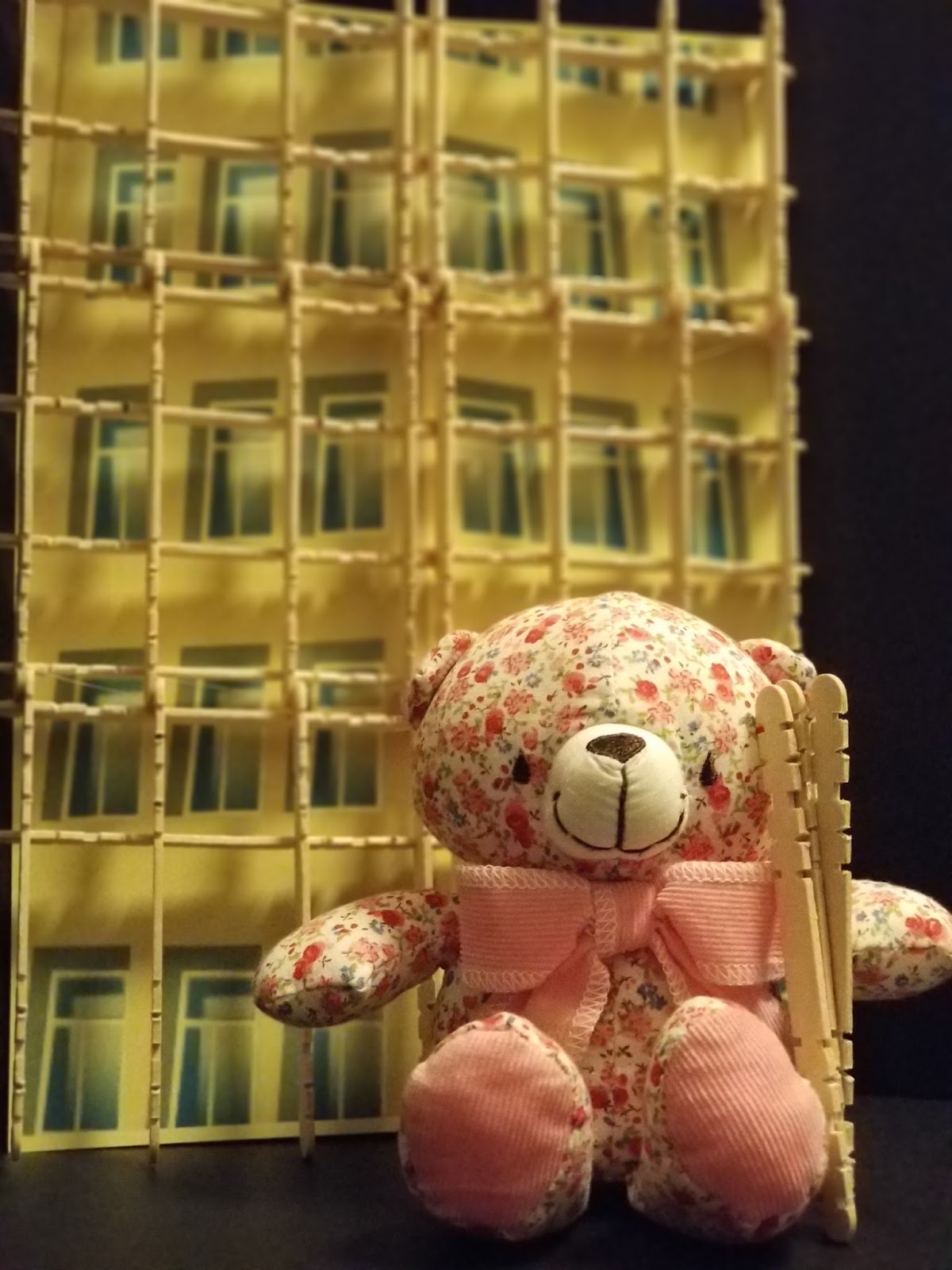
After much controversy, the Medical Registration (Amendment) Ordinance has come into effect after April 6, 2018.  While much attention has been focused on the composition of the Medical Council (the Council), particularly the ratio between appointed and elected members from the profession, there are other changes that are equally important.  In this month’s HKMA News, the Special Feature article from Mayer Brown JSM is on the changes to the Medical Council disciplinary structure and procedure under the Amendment Ordinance.  It appears that some of such changes ripple from the judgment of a judicial review case on the decision of the Preliminary Investigation Committee (PIC) of the Medical Council: Law Yiu Wai, Ray v. The Medical Council of Hong Kong and Others, HCAL 46/2015.  I review some recent court cases on the PIC and will discuss how the court sees the composition, the function and the power of the PIC fit in the whole disciplinary procedure of the Medical Council.  Changes under the Amendment Ordinance will also be analyzed.  For easy reference, quotes from judgments are also included in my full article, which is available online.  You can just scan the QR code on the “bear bear” photo to access. 

The Medical Council is a statutory body established under the Medical Registration Ordinance (MRO) to regulate the medical profession in Hong Kong through a system of registration.  Among the various duties and responsibilities, the Council is required to handle complaints and to conduct inquiry and disciplinary proceedings.  Section 21 of the MRO sets out the disciplinary powers conferred to the Council.  Details of the disciplinary procedures are set out in the Medical Practitioner (Regulation and Disciplinary Procedure) Regulation (MPR).

While we are familiar with the PIC and the Inquiry, the court considers the disciplinary procedure as composing of 3 tiers: an initial check by the PIC Chairman and Deputy Chairman, investigation by the PIC, and the formal inquiry hearing.[i]  The role of the PIC is important as it screens cases twice and can determine which case to refer to inquiry.  The composition of the PIC is set out in Section 20S of the MRO. Before the Amendment Ordinance, among the 7 PIC members, 6 were medical practitioners.  The lay member was from 1 of the 4 lay members of the Council.  The Chairman and Deputy Chairman were members of the Council and were elected by the Council.  The 4 medical practitioners (who had to be non-Council-members) were nominated by the Director of Health, the HK Medical Association, the Hospital Authority and any member of the Council respectively.  After the Amendment Ordinance, more than one PIC can be established.  Each PIC is still composed of 7 members.  However, the number of lay members has increased to 3.  They can either be lay Council members or lay Assessors.  For the 4 medical practitioners, they can either be Council members or Assessors. All the PIC members are appointed by the Council.  The Chairman and Depute Chairman of the PIC are appointed by the Council from the 7 PIC members.[ii] 

The implications of the changes are that the ratio of laymen to medical practitioners has increased from 1:6 to 3:4.  The Chairman and Depute Chairman can be laymen, and they can be non-Council-members.  To an extreme, a PIC can be formed with no Council member at all and chaired by a layman.  However, a majority of medical practitioners is still required for a meeting of the PIC. 
 
The functions of PIC and its Chairman are set out in Section 20T of the MRO[iii].  Details of the procedures for the PIC are set out in Part 3 of the MPR.  There is no actual change to these sections except some wordings to accommodate the establishment of more than one PIC. 

For a 3-tier system, it is important to distinguish the function and the scope of power of each tier.  In Dr Leung Kam Chung Kenneth v Medical Council, CACV 33/1996, the defendant doctor was complaint about his liposuction procedures.  The PIC found evidence of canvassing in the course of investigation and added new charges when it referred the case for inquiry.  The PIC was ruled acting beyond its power.  The court stated that the function of the PIC was a screener "to ensure that medical practitioners are not vexed with complaints which might turn out, after inquiry, to be groundless." [iv]  However, in Dr. Li Wang Pong v. Medical Council, HCAL12/2008, the court affirmed that the PIC Chairman was entitled to formulate charges that were not complaint about.  The defendant doctor was complaint about canvassing.  The PIC Chairman, after reading related materials, found problems with the defendant doctor's liposuction procedure.  The court relied on an English case R v General Medical Council, Ex parte Toth [2000] 1 WLR 2209, and emphasized the overarching principle of protecting the public.[v]  Thus, "the Chairman of the PIC is not bound to adopt a blinkered approach. He is not restricted to the specific complaint made by the complainant."  In Dr. U v. PIC, HCAL 12/2008, a complaint against a urologist about a TURP operation was dismissed at the first tier.  Later, the urologist admitted liability in a civil claim.  The court ruled that the PIC could reopen a case even when the Chairman and Deputy Chairman had dismissed the complaint on the grounds that the complaint was groundless, provided that there was new information supplied[vi]. 

To protect the public, the scope of power of the PIC seems to be construed quite wide.  However, for the same principle of public protection, the court in Law Yiu Wai reiterated the screening duty of the PIC and narrowed its investigatory power[vii]:  "The PIC must approach its task with the utmost caution bearing in mind the nature of the procedures where the complainant has no right of access to the medical practitioner's response and the state of the material at that stage.  It is not the PIC's role to resolve any conflicts of evidence."  It also criticized the Chairman and Deputy Chairman of the PIC, as first screener, "to arrogate to themselves the role of the PIC and decide whether the complaint should be referred to the Council for inquiry, still less to arrogate to themselves the role of the PIC and weigh up conflicting evidence or judge the prospects of success."[viii]  The role of resolving conflicts of evidence is left to an inquiry hearing, where witnesses can be examined and cross-examined.  The court makes sure that the first two tiers of the disciplinary procedures err on the side of public protection.  

How far is this public-protection pendulum going to swing?  It encountered the only check from the human right to privacy.  In Chairman and Deputy Chairman of PIC v. Hospital Authority, HKCFI 843, the court refused to issue a mandatory injunction to order the Hospital Authority to produce documents of patients without their consents for the use by the PIC for handling complaints from third parties[ix]. 

With full swing of the pendulum towards public protection, it is hard to see how the new PICs under the Amendment Ordinance can strike a balance to also ensure that medical practitioners are not vexed with complaints which turn out to be groundless.

_____________________

[i] Para 44.  Law Yiu Wai, Ray v. The Medical Council of Hong Kong and Others, HCAL 46/2015.  Briefly stated the statutory scheme for the consideration and determination of complaints is a three tier system.  The first is an initial check by the Chairman or the Deputy Chairman as to whether there is any substance to a complaint.  It is supposed to be a prompt appraisal of a complaint, including any materials supplied, to remove an obvious case that is frivolous or groundless, and should not proceed further.  The case can only be dismissed after consultation between the Chairman and the Deputy Chairman.  If a complaint is not dismissed after the first check, a second more rigorous check by the PIC is conducted as to whether or not to refer the case for inquiry and determination by the Council for inquiry.  This involves a more detailed consideration of the complaint and where the medical practitioner can submit information in response.  In deciding that no inquiry is to be held, the PIC has the option to issue a letter of advice to the medical practitioner.  It is on the basis that the case should be inquired into that a referral is made to the Council for inquiry by way of a formal charge.  Finally, if the PIC makes such a referral, the Council for inquiry then determines by way of formal hearing whether the complaint of "misconduct in a professional respect" is established.
 
 [ii] Comparison Results:

CAP 161 MEDICAL REGISTRATION ORDINANCE Section 20S Preliminary Investigation Committee
s20S-19970630.html (19970630)
CAP 161 MEDICAL REGISTRATION ORDINANCE Section 20S
Preliminary Investigation Committee
s20S.html (Current Version)

Line(s) 9-10:

Caution : This is a past version. See the current version for the latest position.

Changed Line(s) 9:

Line(s) 12:

(1) If the Council decides to establish the Preliminary Investigation Committee, the Council shall appoint to the Committee— (a) a chairman who shall be elected by the Council from among its members; (b) a deputy chairman who shall be elected by the Council from among its members; (c) 1 registered medical practitioner, not being a member of the Council, nominated by the Hong Kong Medical Association; (d) 1 registered medical practitioner, not being a member of the Council, nominated by the Director; (e) 1 registered medical practitioner, not being a member of the Council, nominated by the Hospital Authority; (f) 1 registered medical practitioner, not being a member of the Council, nominated by any member of the Council; (g) 1 of the 4 lay members of the Council.

Changed Line(s) 11:

(1) If the Council decides to establish a Preliminary Investigation Committee, it must appoint to the Committee— (a) 4 registered medical practitioners each of whom is— (i) a member of the Council; or (ii) a medical assessor; and (b) 3 lay persons each of whom is— (i) a lay member of the Council; or (ii) a lay assessor. (Replaced 15 of 2018 s. 18)

Line(s) 14:

(2) The quorum of a meeting of the Preliminary Investigation Committee is 3, at least 1 of whom shall be a lay member, subject to the majority being registered medical practitioners, including the chairman or deputy chairman, or both.
Changed Line(s) 13:

(1A) The Council must appoint— (a) a member of a Preliminary Investigation Committee to be the chairman of the Committee; and (b) another member of the Committee to be the deputy chairman of the Committee. (Added 15 of 2018 s. 18)

Line(s) 16:

(3) At a meeting of the Preliminary Investigation Committee, the chairman or, in his absence, the deputy chairman, shall preside.     
Changed Line(s) 15:

(2) At a meeting of a Preliminary Investigation Committee, the quorum is 3 persons, at least one of whom is a member appointed under subsection  (1)(b). (Replaced 15 of 2018 s. 18)

Line(s) 18:

(4) Notwithstanding subsection (3), if both the chairman and the deputy chairman declare their interest in respect of a particular case which is to be decided at a meeting, neither of them may preside at the meeting and the members present (including the chairman and the deputy chairman) shall elect another member to preside at the meeting.

Changed Line(s) 17:

(2A) In addition— (a) the majority of the persons present at the meeting must be registered medical practitioners; and (b) the chairman and the deputy chairman are counted towards the majority mentioned in paragraph (a). (Added 15 of 2018 s. 18)

Line(s) 20:

(5) A member of the Preliminary Investigation Committee appointed under subsection (1)(g) shall hold office for such period not exceeding 3 months as the Council may specify in his letter of appointment. Other members of the Preliminary Investigation Committee shall hold office for 12 months.         
Changed Line(s) 19-23:

(3) At a meeting of a Preliminary Investigation Committee, the chairman or, in his absence, the deputy chairman, shall preside. (Amended 15 of 2018 s. 18)

(4) Notwithstanding subsection (3), if both the chairman and the deputy chairman declare their interest in respect of a particular case which is to be decided at a meeting, neither of them may preside at the meeting and the other members present and who form a quorum must elect a person from among themselves to preside at the meeting. (Amended 15 of 2018 s. 18)

(5) A member of a Preliminary Investigation Committee— (a) holds office for a period not exceeding 12 months as specified by the Council in the member’s letter of appointment; and (b) is eligible for reappointment for a further period or periods not exceeding 12 months each on the expiry of the member’s period of appointment or reappointment. (Replaced 15 of 2018 s. 18)

Line(s) 41:

URL: http://www.hklii.hk/eng/hk/legis/ord/161/s20S-19970630.html

Changed Line(s) 44:

URL: http://www.hklii.hk/eng/hk/legis/ord/161/s20S.html


 [iii]
 
CAP 161 MEDICAL REGISTRATION ORDINANCE Section 20T
Functions of Preliminary Investigation Committee and its chairman
s20T-19970630.html (19970630)   

CAP 161 MEDICAL REGISTRATION ORDINANCE Section 20T
Functions of Preliminary Investigation Committee and its chairman
s20T.html (Current Version)

Line(s) 9-10:

Caution : This is a past version. See the current version for the latest position.

Changed Line(s) 9:

Line(s) 12:

(1) The Preliminary Investigation Committee has the following functions— (a) to make preliminary investigations into complaints or information touching any matter that may be inquired into by the Council or heard by the Health Committee and to give advice on the matter to any registered medical practitioner;  (b) to make recommendations to the Council for the holding of an inquiry under section 21; (c) to make recommendations to the Health Committee for conducting a hearing;  (d) to make preliminary investigations upon a referral by the Education and Accreditation Committee.

Changed Line(s) 11-12:

(1) A Preliminary Investigation Committee has the following functions— (Amended 15 of 2018 s. 19) (a) to make preliminary investigations into complaints or information touching any matter that may be inquired into by an inquiry panel or heard by the Health Committee and to give advice on the matter to any registered medical practitioner; (b) to refer a case to an inquiry panel for holding an inquiry under section 21; (Replaced 15 of 2018 s. 19) (c) to make recommendations to the Health Committee for conducting a hearing; (d) to make preliminary investigations upon a referral by the Education and Accreditation Committee.

Line(s) 14:

(2) A matter brought to the attention of the Preliminary Investigation Committee for determining whether the Health Committee should be recommended to conduct a hearing or whether the Council should be recommended to hold an inquiry shall first be considered by the chairman of the Preliminary Investigation Committee or, in his absence, the deputy chairman thereof.          

Changed Line(s) 14:

(2) A matter brought to the attention of a Preliminary Investigation Committee for determining whether a referral should be made to an inquiry panel, or whether the Health Committee should be recommended to conduct a hearing, must first be considered by the chairman of the Preliminary Investigation Committee or, in his absence, the deputy chairman thereof.

Line(s) 16-20:

(3) The Preliminary Investigation Committee, its chairman and deputy chairman shall act in accordance with such regulations in relation to their procedure made under section 33.
Changed Line(s) 16-22:

(2A) If a Preliminary Investigation Committee decides to exercise its function described in subsection (1)(b), it must send a written notification of the decision to the Council. (Added 15 of 2018 s. 19)

(3) A Preliminary Investigation Committee, its chairman and deputy chairman shall act in accordance with such regulations in relation to their procedure made under section 33.
(Amended 15 of 2018 s. 19)

Line(s) 37:

URL: http://www.hklii.hk/eng/hk/legis/ord/161/s20T-19970630.html

Changed Line(s) 39:

URL: http://www.hklii.hk/eng/hk/legis/ord/161/s20T.html


[iv] Para 9.  The Preliminary Investigation Committee is in effect put in as a screening body, to ensure that medical practitioners are not vexed with complaints which might turn out, after inquiry, to be groundless: And, using the language of Lord Mackay in Gee v. General Medical Council [1987] 2 AER 193 at 197H, in relation to the similar scheme in the United Kingdom, the procedure for preliminary investigation provides "a coherent and important filter process which must be observed".  Given the nature of a medical practitioner's responsibilities, often having to deal professionally with unhappy or even disturbed individuals, this would seem a wise and necessary process.


[v] Para 38. 1.  In R v General Medical Council, Ex parte Toth [2000] 1 WLR 2209, Lightman J commented on the English disciplinary provisions in the following terms (at pp 2217-2219):


"The statutory scheme
10.The provisions in the Act and Rules to which I have referred are designed to protect the public from the risk of practice by practitioners who for any reason (whether competence, integrity or health) are incompetent or unfit to practice and to maintain and sustain the reputation of, and public confidence in, the medical profession.  The public have higher expectations of doctors and members of other self-governing professions, and their governing bodies are under a corresponding duty to protect the public against the incompetent as well as the deliberate wrongdoer; serious professional misconduct includes serious negligence; and whether the treatment of a patient constitutes serious professional misconduct is to be judged by the proper professional standards in the light of the objective facts about the individual patient: see McCandless v General Medical Council [1996] 1 W.L.R. 167.  The Act and Rules set out to provide a just balance between the legitimate expectation of the complainant that a complaint of serious professional misconduct will be fully investigated and the need for legitimate safeguards for the practitioner, who as a professional person may be considered particularly vulnerable to and damaged by unwarranted charges against him.

…...

14. My conclusions are as follows.

(1) The general principles underlying the Act and Rules are that (a) the public have an interest in the maintenance of standards and the investigation of complaints of serious professional misconduct against practitioners; (b) public confidence in the G.M.C. and the medical profession requires, and complainants have a legitimate expectation, that such complaints (in the absence of some special and sufficient reason) will be publicly investigated by the P.C.C.; and (c) justice should in such cases be seen to be done.  This must be most particularly the case where the practitioner continues to be registered and to practice.

(2) There are a serious of processes designed to filter out complaints which need not or ought not to proceed further.

(3) The register’s role is merely to ensure that the complainant has complied with the formal requirements laid down for investigation of a complaint.

(4) The role of the screener is a narrow one.  It is to filer out from the formally correct complaints, not those which in his view ought not to proceed further, but those which he is satisfied (for some sufficient and substantial reason) need not proceed further.  For this purpose he must be satisfied of a negative, namely that the normal course of the complaint proceeding to the P.P.C. need not to be followed.  The assumed starting point is (1) above and the need referred to is the need to honour the legitimate expectation that complaints (in the absence of some special and sufficient reason) will proceed through the P.P.C. to the P.C.C.  The absence of 'need', of which the screener must be satisfied before he can halt the normal course of the complaint to the P.C.C., connotes the absence of any practical reason for the complaint so proceeding and that for the complaint to proceed to the P.C.C. would serve no useful purpose.  There may be no need because there is nothing which in law amounts to a complaint; because the formal verification is lacking; because the matters complained of (even if established) cannot amount to serious professional misconduct; because the complainant withdraws the complaint; or because the practitioner has already ceased to be registered.  Wider questions, as to the prospects of success of the complaint, as to whether the complainant is acting oppressively or as to the justice of the investigation proceeding further, do not lie within the screener's remit.  So far as they may go to the issue whether the complaint ought to proceed, they fall within the remit of the P.P.C.  It is not for the screener to arrogate to himself the role of the P.P.C. and decide whether the complaint ought to proceed further, still less to arrogate to himself the role of the P.C.C. and weigh up conflicting evidence or judge the prospects of success.  He must respect the role assigned by the Rules to the P.P.C. (for which the P.P.C. is armed with investigative powers) and recognise that his duty is only to act as a preliminary filter before the more substantive role as filter is exercised by the P.P.C."

The approach in Toth has been followed thereafter, subject to minor qualifications, as is clear from the English Court of Appeal decision in Henshall v General Medical Council (2005) 88 BMLR 146, 154 to 157 (paras 25 to 33).


[vi] Para 27.2.  Once the case is extant (whether as a result of a new complaint, or of the receipt of new information), it would be completely unrealistic and contrary to the intent and purpose of professional misconduct investigations to suggest that only certain aspects of it (the "new" complaint) may be considered, and not other aspects, for this case only involved one course of treatment of the patient over a single period of only a few days.  


[vii] Para 135.  The salient tasks and functions of the PIC during the second stage screening can be summarised as follows: 

(1) The PIC's role is to consider the case, having regard to all the materials put before it by the Secretary and any written explanation submitted by the medical practitioner. 
(2) The PIC must determine that either no inquiry shall be held (with the option to issue a letter of advice to the medical practitioner) or that the case be referred to the Council for inquiry. 
(3) The PIC has to consider and, if necessary, further investigate whether the materials placed before it, would justify referral of the case to the Council for inquiry. 
(4) The PIC may examine whether the complaint has any "real prospect of being established", and may themselves conduct preliminary investigation into its prospects, and may refuse to refer to the Council if satisfied that the real prospect is not present. 
The PIC must approach its task with the utmost caution bearing in mind the nature of the procedures where the complainant has no right of access to the medical practitioner's response and the state of the material at that stage.  It is not the PIC's role to resolve any conflicts of evidence.


[viii] Para 123.  The role of the first stage screeners is a narrow one which requires them to filter out complaints which they are satisfied should not proceed further.  For this purpose, he must be satisfied of a negative in that the normal course of the complaint proceeding to the PIC should not be followed.  

As noted by the English cases, wider questions, as to the prospects of success of the complaint, or whether the complaint is acting oppressively, or the justice of the investigation proceeding further, do not lie within the remit of the first stage screeners.  It is not for the first stage screeners to arrogate to themselves the role of the PIC and decide whether the complaint should be referred to the Council for inquiry, still less to arrogate to themselves the role of the PIC and weigh up conflicting evidence or judge the prospects of success.   

[ix] Para 42.  A patient's records are confidential as between him and his doctor.  They are equally confidential as between the patients and the HA: A Health Authority v X [2001] 2 FCR 634 at §31. 

Accordingly, the HA owes a positive duty of confidentiality to protect a patient’s personal details, health information and treatment from disclosure to third parties. 

The obligation of confidentiality arguably survives the death of a patient.  That obligation is one of conscience, not of property: Lewis v Secretary of State for Health [2008] EWHC 2196 (QB) at §§18-30 per Foskett J. 

Article 7 of BORO provides that BORO is binding upon all public authorities and any person acting on behalf of the Government or a public authority, of which HA is one.   Infringement of the right may give rise to remedies against HA under Article 6 of BORO.

(Source: HKMA News May 2018)

2018年4月26日 星期四

Telemedicine


Recently there has been increased concern about telemedicine.  Some see it as a new opportunity for business.  More worry about the potential problems it creates.  Can doctors “see” patients using WhatsApp aided by photos and voice recordings?  How about live chats via computers?  Is physical examination dispensable in some cases?  How about spot diagnosis?  Can doctors prescribe without meeting the patients physically?

Actually, telemedicine is nothing new.  I read in novels that in the old days patients wrote long letters describing their symptoms to doctors.  And I think every doctor has answered telephone calls from patients.  Most of us would have given advice via the phone.  Some have placed phone orders to nurses.  While there are some features unique to telemedicine, I do not regard it a standalone process.  Rather, it is part of consultation.  Thus, rules for the normal consultation process apply.

It must be clear to both the doctor and the patient that it is, or it is not, a medical consultation.  This is very important but can easily be overlooked.  A patient might just send you some photos or questions.  While you consider them casual chats, he might take your answers seriously and rely totally on you.  In such cases, a doctor-patient relation is established.  The doctor is said to owe a duty of care to the patient.

Whether the doctor has discharged his duty of care to the patient would be judged by the standard of care, with reference to the standard of his peers.  Telemedicine is just part of the consultation process.  It is up to the doctor to justify how much he relies on the information he collected through telemedicine.  The doctor can always request the patient for a face to face history taking, followed by physical examination and investigations.  However, with the real-time live-chat technologies, there might not be much difference in the history taking part.  Telemedicine might even serve better as the patient is in his familiar environment and can be more at ease.  Sometimes, the patient might be able to show you some paroxysmal physical signs which can never be witnessed at the consultation room.

The aim of consultation is to arrive at a diagnosis, or to derive a management plan.  Some doctors regard telemedicine dangerous as it is difficult to adequately examine the patient physically.  However, it all depends on the condition of the patient.  Physical examination might not be necessary.  Or, telemedicine might serve as a temporary measure to handle the patient.  It is the clinical decision that matters.  Even during a normal face to face consultation, similar argument can apply.  Do we need to investigate every patient?  Physical examination has its limitations.  But obviously we would not say that a consultation is not complete without investigation.  Most consultations end with history taking and physical examination.  This applies to telemedicine also.  We need to know the limitations and the merits of telemedicine.  In rare occasions, it can stand alone.  In most occasions, it can help to diagnose and to manage.

It is prudent to build a safety net for yourself and for your patient.  Apart from the most probable diagnosis, we always need to rule out some differential diagnoses with serious implications, especially treatable ones.  I remember when I was working in the A&E Department, I always ran through the 10 treatable causes of sudden loss of consciousness, and I always carried a wide bore needle, just in case I encountered a patient with bilateral tension pneumothorax.  In telemedicine, it might be possible to send a from-the-lawyer disclaimer to every patient you see if you really love defensive medicine.  It is up-to-standard practice to alert patient on any red flags, explain the natural course of the illness, warn about the limitations of the consultation, and arrange for follow-ups.

Thus, telemedicine is not a new topic for doctors.  There are existing codes and laws governing its practice.  However, the real threat to patients is the lack of clear laws, and the failure in enforcing such laws, for non-medical parties.  They might sell health food, sell drugs, solicit patients to non-orthodox treatments through engaging with patients via telecommunication and advertisements.  We do not want to repeat the history of untrained “beauticians” doing whatever they choose to while doctors’ hands are tied. 


(Source: HKMA News April 2018)

2018年3月26日 星期一

Professionalism or Protectionism? Pragmatism or Dogmatism?


After our Financial Secretary announced the 2018-19 Budget, there was much criticism from law-makers and citizens alike.  His pro-government allies even openly asked him to redo his major piece of homework.  However, he was decent enough to spare his valuable time and energy to raise public concern on the issue of medical protectionism.  Again, he suggested that we should allow overseas doctors to practice in Hong Kong.  I assumed that he understood our medical system and knew that there is already the Licensing Examination as a route for a non-locally graduated doctor to get a license and practice in Hong Kong.  So, I took it that he was referring to by-passing the Licensing Examination. 

This is a highly controversial suggestion.  It involves a fundamental change to the Medical Registration Ordinance and there are numerous practical issues.  The Hong Kong Medical Association has been too dutiful and too diligent in directly tackling this problem with the aim of protecting the public and the profession.  However, the result was that parties taking the suggestion seriously were repeatedly labelled “protectionism”.  While we were talking about up-holding standards, official responses were that profits of private doctors would not be jeopardized.  Seemingly, blaming doctors serves as a good excuse to the apparent shortage of manpower in the public sector.  It was not us who did the obviously below standard manpower planning.  It was not us who raun the Hospital Authority and failed to tackle even a less-serious-than-average influenza surge.  And then, officials got indulged in this scapegoating game.  Whenever they mess up, they chant “protectionism” and pray to divert public attention at no cost. 

On the same day when our Financial Secretary smiled sheepishly and did his chanting, a group of construction workers went for a demonstration against the slow flow of funding from the government.  Not long ago, the same group of workers demonstrated to fight against importing foreign workers despite outcries from developers.  This was not labelled “protectionism”.  Actually, the government is practicing protectionism in various aspects without admitting it.  The government is adopting a tolerating, if not encouraging, stance towards minimally trained “cosmetic workers”.  There had been numerous blunders.  The medical profession had voiced out repeatedly.  The Consumer Council had openly advised on tightening controls.  Instead of protecting the public, the government chose to protect the income of these workers. 

I am not sure whether not importing workers to do dish-washing is protectionism.  But having mechanism in place for overseas doctors to take examination and get a license is surely not protectionism.  Some chanters commented that the passing rates of the Licensing Examination were too low.  Apart from reviewing the contents of the Examination, we might also need to consider whether Hong Kong can attract high-caliber overseas doctors.  We speak Cantonese dialect.  Most of us can only afford to dwell in ashamedly tiny cubicles.  We save every dime and send our kids to study abroad before their puberties.  Doctors are not allowed to advertise.  The dire working conditions of public hospitals hit newspaper headlines now and then.  Some of us fly regularly to Japan or Australia just to remind ourselves how a blue sky should look.  I do not think Hong Kong is the dream land for the cream of the cream, especially those married and with kids. 

Keeping the standard is important.  Examination is the most commonly recognized, though not perfect, way.  If exemptions from the Licensing Examination are granted, how are we going to maintain the standard?  Laymen’s matter-of-fact referral to “well-recognized” universities is but topics in WhatsApp group chats or amateur views from newspaper columnists.  To write it in the Medical Registration Ordinance, we need specific details that are reasonable and can stand from challenges.  Are we going to exempt all graduates from all universities from the United Kingdom?  Or just some selected universities?  How about graduates from other European countries?  How about those from the United States?  Or those from Mainland?

Does exempting an overseas doctor from the Licensing Examination mean exempting him from the internship?  In such case, we have practically surrender all controls on the entrance requirements.  Should the exempted doctors be allowed to practice under the employment of the Hospital Authority only?  The recent program of granting limited registrations to non-local doctors “to relieve manpower pressure and alleviate the workload pressure of frontline doctors” has stretched the Medical Registration Ordinance to a dangerous level.  Working posts with no training and no promotion prospect are provided to junior non-local doctors.  I doubt how job-satisfied those candidates will be.

Working is but one aspect of life.  Will qualified doctors become Hong Kong citizens?   Or will they be hailed back to their home countries if our Hospital Authority decides to end their contracts for one reason or another?  If non-local doctors who are exempted and granted licenses can stay in Hong Kong by starting their own private practice, it would create a loop-hole for some to just register their business and never practice medicine.  Hong Kong becomes a region with no border to medical graduates.

I have had enough.  I reiterate that I object to the talking-in-a-vacuum allowing foreign doctors to practice in Hong Kong without formal standard assessment.  I am not going to change my stance.  However, pragmatism might be a strategy against dogmatism.  I would like to urge the finger-pointers to forward a formal proposal to enlighten the profession and the public how they are going to solve the above problems.

I have all my dogmatic labels ready to throw at whoever speaks up.


(Source: HKMA News March 2018)

2018年2月26日 星期一

100% of the Time Is Easier Than 98% of the Time


 “It is easier to hold to your principles 100 percent of the time than it is to hold to them 98 percent of the time.” 

The above is a quote from Clayton Christensen in his book “How Will You Measure Your Life?”  Clayton is the Professor of Business Administration at the Harvard Business School of Harvard University.  The book was published in 2012, while he was 60.  As a professor at the Harvard Business School, he taught and discussed with many students every year about their career paths after they left the University.  After witnessing too many sad stories, he summarized his teachings into formulating answers and strategies to 3 fundamental questions:
  1. How can I be sure that I will be successful and happy in my career? 
  2. How can I be sure that my relationships with my spouse, my children, and my extended family and close friends become an enduring source of happiness? 
  3. How can I be sure that I live a life of integrity- and stay out of jail?

He knew for sure that “none of those people (with sad stories) graduated with a deliberate strategy to get divorced or lose touch with their children- much less to end up in jail.  Yet this is the exact strategy that too many ended up implementing.”  He realized that it was strategies and theories that mattered.  “You might be tempted to try to make decisions in your life based on what you know has happened in the past or what has happened to other people….  But this doesn’t solve the fundamental challenge of what information and what advice you should accept, and which you should ignore as you embark into the future.  Instead, robust theory to predict what will happen has a much greater chance of success.”  What he did was to try to highlight theories that applied successful in business organizations, and to apply them in answering the above 3 questions. 

It is sure anti-climax to tell young Harvard graduates that their aim in life should be ensuring happiness by having a career that makes you happy (not about money or position), maintaining relationships, and keeping yourselves out of jail!  Since I am probably fixed in the first 2 aspects, I am more interested in how to keep myself out of jail.  Here comes Clayton’s famous quote: “It is easier to hold to your principles 100 percent of the time than it is to hold to them 98 percent of the time.”  He tried to explain why people deviated so much from their aspiration by the theory of “marginal costs”.  “Many of us have convinced ourselves that we are able to break our own personal rules ‘just this once.’  In our minds, we can justify these small choices.  None of those things, when they first happen, feels like a life-changing decision.  The marginal costs are almost always low.  But each of those decisions can roll up into a much bigger picture, turning you into the kind of person you never wanted to be.” 

He used 2 examples to illustrate that the actual cost implication would be much higher than the individual marginal cost.  The first was the story about Nick Leeson, the twenty-six-year-old trader who famously brought down British merchant bank Barings in 1995 after racking up $1.3 billion in trading losses before being detected.  That was not a planned action.  Everything started with a small error that Nick chose to cover up instead of admitting it.  The second was Clayton’s own story.  He joined the university basketball team when he was studying in England.  Once, he refused to take part in the champion game he had longed for, and that his coach insisted his attending, and his team-mates and friends begged him to.  The reason was that the game fell on a Sunday, and Clayton had made a personal commitment to God that he would never play ball on Sunday because it was their Sabbath.  It turned out that his team won despite his absence.  And he drew the conclusion that he had made the right choice and that sticking 100 percent to his principle saved him from crossing of the line repeatedly in the future.

At this point, I would like to tell my own story. When I was a houseman in a medical ward, my senior told me repeatedly that I should order a chest X-ray for an in-patient with COAD (chronic obstructive airway disease) if his condition deteriorated.  That was to make sure that there were no new complications such as pneumothorax.  Soon, I found that I had to order portable X-ray nearly everyday for half of the COAD patients.  By no means was I able to follow the instruction that my senior reiterated.  So I had to clinically distinguish who deteriorated more among those who deteriorated.  I came to the same conclusion that following guidelines and instructions 100 percent was much simpler.  However, there were various constrains in real life.  Furthermore, medicine is not exact science.  Doctors have to make decisions on which principle to apply, and more often, to justify deviation from the principle because of various real-life limitations such as resources, patient’s condition, patient’s preference.  Right from the start, we have chosen the hard way. 

It is still important to remember Clayton’s teaching.  I am not telling you to be a rigid, button-pressing, robotic doctor; though it might not be a bad choice for young doctors in the recent doctor-blaming, illogical, probability-ignorant environment.  What Clayton meant was that once you deviate from the principle, you lost your norm.  Your principle became “principle + 1”.  You got used to it, and next time, you deviated from your “principle + 1” and set the “principle + 2” as norm.  It would be tempting to do it again, and again. The result was that you moved away from the principle, which was set out with a sound reason, miles away.  My strategy to tackle this “deviation from strategy” dilemma is to be mindful.  Always remember and judge with respect to the original principle.  Each event is an individual event and does not affect the principle at large. 

Since we have chosen the hard way to uphold 98 % of the time, be aware of the difficulties and the implications.  Work out your own strategy to stay away from trouble, and jail. 


 (Source: HKMA News February 2018)  
 

2017年12月23日 星期六

The Anti-antibiotic Abuse


While people are constantly talking about the abuse of antibiotics, I see a trend in the abuse of anti-antibiotic measures.  I would like to draw the attention of the abusers and those being abused to this unhealthy trend.  The following is an analysis of the similarities and undesirability of the two abuses.

The use 
Antibiotics are very useful in treating bacterial infections.  Since their invention, lethal bacterial infections and epidemics are much better controlled.  Once, antibiotics were regarded magic bullets.  However, even magic bullets have their limitations.  You need to properly aim your targets before the bullets can hit them.  And, if your targets are wearing magic-bullet-proof vests, antibiotics lose their halos.

To guard against blind-shooting and the development of antibiotic resistance, measures against the abuse of antibiotics are very important.  These measures are multi-faceted.  You can increase the knowledge of the public and the medical profession.  You can modify the practice of antibiotic uses through legislation such as classifying antibiotics controlled medicine, or through education such as launching campaigns.  Since the awareness of the need to control the abuse of antibiotics, most antibiotics are still very effective against common infections.     

The abuse 
Because of one reason or another, doctors began to abuse antibiotics.  Abuse is the use when there is no indication, or when the harmful effects outweigh the desirable effects.

It is true that over 80% of upper respiratory tract infections do not need antibiotics.  However, it is also true that over 80% of doctors do not need to be reminded of this fact.  As in the use of antibiotics, we need to consider the indications, the spectrum, the doses, the durations and the side-effects when instilling measures against antibiotic abuses.  Targeting all doctors with over-potent and too-board-spectrum measures is obviously an abuse.  Asking patients to take pictures of all medications for all consultations so as to guard against antibiotic abuse is obviously worse than prescribing antibiotics to all patients, no matter they come for upper respiratory tract infections, or for consultation of mood disorders.  

The lethal side-effect 
One of the major reasons for the need of justified use of antibiotics is to prevent undesirable effects, among which is the disturbance of the normal flora of the body.  Abuse of anti-antibiotic measures will not kill the patient, nor the doctor; but they will kill the important trust between the patient and the doctor.  Undermining the trustworthiness of doctors in their prescriptions will naturally prompt patients to query the diagnoses and the management.  Without trust, how can the doctor convince the remaining 20% of the “URTI patients” who suffer from scarlet fever, Streptococcal pharyngitis and pneumonia to take antibiotics? 

Just like antibiotic resistance, there might also be group effect for mistrust.  Instead of rendering the individual advice on antibiotic use for upper respiratory tract infection useless, mistrust can affect other decisions on the use of antibiotics.  Alarmingly, mistrust, like antibiotic resistance, is also communicable among patients. 

Another serious side-effect for antibiotics is drug allergy.  We cannot accurately predict which individual will develop drug allergy towards which antibiotic.  However, a significant percentage of individuals will have drug allergy is a certainty.  10% of the population is sensitive towards penicillin.  Actually, people can have adverse reactions towards measures against antibiotic abuse.  In the anti-antibiotic campaign, it is interesting that seeming no one has addressed this hypersensitivity issue.  There are individuals who over-react to the anti-antibiotic messages and see antibiotics as evil.  Hypersensitive parents might put their children at risks of fatal bacterial infections. 

Evidence-based practice
Some, if not most, cases of antibiotic abuse are out of good will.  It is just that the doctor does not know that antibiotics do not help.  Clinical judgments on the causative agents of infection might not be accurate.  Even some bacterial infections, such as otitis media, might not need antibiotics.  These are the reasons that evidence-based practice is important.  Epidemiology tells us the prevalence of viral pharyngitis.  Clinical trials tell us that antibiotics might not be useful for cough. 

The appeals for judicial use of antibiotics are out of good wills.  However, chanting the mantra of antibiotic abuse is only self-serving the chanters.  Calling for outrageous actions will have no effect apart from side-effects.  Behavioral modification is the biggest challenge in community medicine and family medicine.  It needs expertise and it needs skillful means.  It is time to go back to evidence-based practice in the control of antibiotic abuse. 

The Abuse by others 
Doctors are not the only contributors for antibiotic abuse.  Despite being controlled medicine, antibiotics can easily be purchased by patients without prescription in Hong Kong.  In agriculture and fisheries, antibiotics are abused to a much greater scale.  Tons of antibiotics are routinely used in the hope of preventing diseases.  It is important to behave ourselves.  But it would be irresponsible if we ignore the big picture and never mention the other sources of antibiotic abuse.  In doing so would divert the public attention, scapegoat the doctors, and at the same time would not solve the problem. 

The relation between the medical profession and the public has also been undermined by various other sources.  Some attack doctors for not being able to treat the root causes of diseases.  Some claim that their treatments are better as they are without side effects.  Some claim that doctors are poisoning their patients with all kinds of drugs.  Some are manipulating patients’ spines to treat rhinitis and irritable bowel.  Some say that they are natural and thus superior. 

Facing all these frivolous, yet appealing, claims, it is important to avoid acts that would further undermine the trust on our profession.  The anti-antibiotic abuse needs to be stopped.


(Source: HKMA News December 2017)